

National Scientific Committee Industrial Heritage
Introduction
The Industrial Heritage National Scientific Committee (IHNSC) was first convened in 2006 and functioned until June 2012 as the Industrial Heritage Sub-Committee.
The adoption of the Dublin Principles by ICOMOS General Assembly in Paris in December 2011 was a major step in the recognition of the significance of industrial heritage, and the need for its conservation, protection and enhancement. The following is a synopsis of what constitutes ‘industrial heritage’ as detailed in the Dublin Principles.
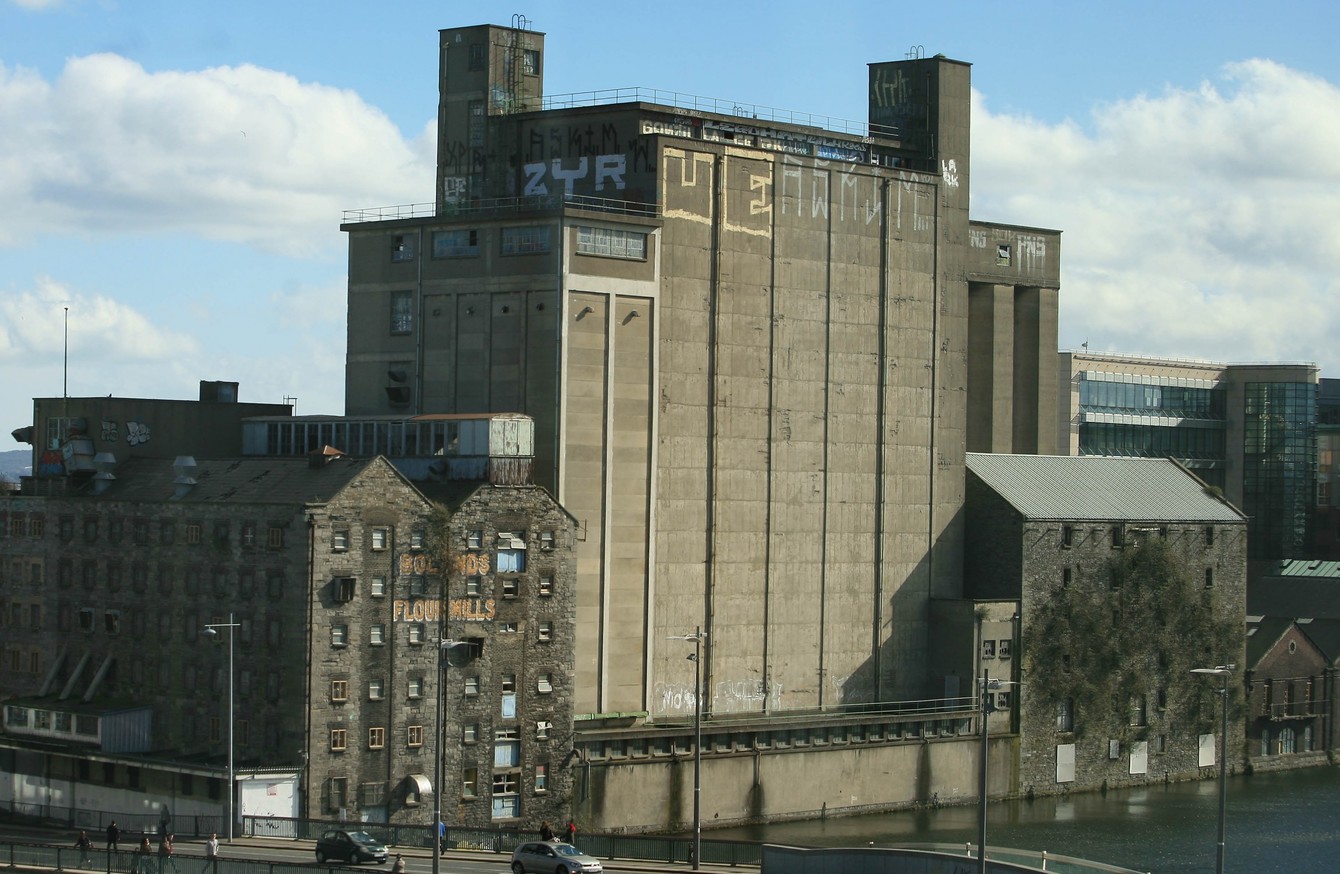
Industry, along with implying manufacturing, includes transport, extraction, public utilities and telecommunications. Industrial heritage consists of a broad range of physical remains and objects including landscapes, sites, structures, machinery and documents which provide evidence of these various types of industry. It includes both material assets and intangible elements such as technical knowledge, work management, and social and cultural legacy. Thus the study and appreciation of industrial heritage can appeal to a people from many different backgrounds including, but not limited to, archaeologists, engineers, geographers, historians, architects, sociologists and those employed in industry.
Please click here to view the Dublin Principles.
Committee Members
Following a review of its committee structure and statutes it reformed as the IHNSC and currently has nine members:
President: Mary McMahon
Vice President: Rob Goodbody
Secretary: Mary-Liz McCarthy
Ordinary Committee Members:
Susan Roundtree
Mona O’Rourke
Gráinne Shaffrey
Lorcan O’Flannery
Eimear O’Connell
Audrey Farrell
Membership: The present membership of the IHNSC is representative of professionals with a broad range of experience in the field of industrial heritage and conservation, including architecture, archaeology, engineering, architectural history, planning, and education. ICOMOS members with a particular interest in, and knowledge of, industrial heritage and conservation are welcome to join.
Activities
INTERNATIONAL WORKING GROUP TO REVIEW CURRENT OPERATIONAL ARRANGEMENTS CONCERNING INDUSTRIAL HERITAGE
ICOMOS Ireland IH NSC received a request from ICOMOS International to facilitate a review of the operational arrangements concerning industrial heritage within ICOMOS. An invitation for expressions of interest was issued to ICOMOS National Committees and ISCs in early 2014 with a view to organising a meeting during the General Assembly taking place in Florence in November 2014.
The invitation garnered a good response and the subsequent meeting enjoyed a lively discussion. At the conclusion of the meeting it was agreed to establish a Working Group to undertake the review. Invitations were subsequently issued calling for expressions of interest in joining the Working Group. The meeting group intends to commence its work by mid 2015 with a view to submitting a report at the General Assembly in 2017.
Industrial Heritage Florence General Assembly Presentation, click here.
Review of Operational Arrangements for Industrial Heritage Meeting Minutes, click here.
POLICY AND PRACTICE CONCERNING INDUSTRIAL HERITAGE WORKSHOP
To coincide with the AdCom and ExCom meetings in Dublin in October 2010. The event, which was sponsored by the Electricity Supply Board of Ireland, took the form of a workshop on the theme of Policy and Practice concerning Industrial Heritage. Among the speakers at the event were Dinu Bumbaru President ICOMOS Canada, and Patrick Martin President TICCIH, who were both members of the Working Group tasked with developing the joint guidelines which were subsequently called the ‘Dublin Principles’. During the workshop the Principles were presented, the background to their development outlined and the main issues covered.
Programme of Work
Three-Year Work Plan (2012 – 2015)
The work of the Industrial Heritage National Scientific Committee over the next three years will comprise:
- Collaboration with the Irish National Committee and other National Committees in reviewing the current methods of communications within and between the wider ICOMOS community.
- Explore whether the establishment of an ISC for IH would improve levels of interaction and co-operation between the specialist areas of interest in ICOMOS.
- Research training and qualification measures for Industrial Heritage in Ireland in consultation with the IHAI, TICCIH, and other National Committees.
- In collaboration with the Education and Training NSC, review the 1993 ICOMOS Guidelines for Education and Training in Conservation of Monuments with particular regard to IH.
- Promotion of the Dublin Principles with ICOMOS Ireland to raise awareness of the significance of industrial heritage, and the need for its conservation, protection and enhancement.
Rules of Governance
Click on the name of items you are interested in:
Establishment
The Industrial Heritage National Scientific Committee (hereinafter called the IHNSC) was founded by ICOMOS Ireland at its meeting on the 12th day of June 2012.
Definition
The “industrial heritage” consists of sites, structures, complexes, areas and landscapes as well as the related machinery, objects or documents that provide evidence of past or ongoing industrial processes of production, the extraction of raw materials, their transformation into goods, and the related energy and transport infrastructures. Industrial heritage reflects the profound connection between the cultural and natural environment, as industrial processes – whether ancient or modern – depend on natural sources of raw materials, energy and transportation networks to produce and distribute products to broader markets. It includes both material assets – immovable and movable –, and intangible dimensions such as technical know‐how, the organisation of work and workers, and the complex social and cultural legacy that shaped the life of communities and brought major organizational changes to entire societies and the world in general.
Objectives
In pursuing its objectives the IHNSC aims to:
- Promote the documentation, assessment, interpretation, conservation, management, and decision-making for adaptive re-use, of industrial heritage.
- Engage with ICOMOS International, the International Committee for the Conservation of the Industrial Heritage (TICCIH), the Industrial Heritage Association of Ireland (IHAI), and any other bodies aligned to the objectives of the IHNSC.
- Collaborate with the national and international ICOMOS community in exploring the potential benefits of establishing an International Scientific Committee on Industrial Heritage.
- Encourage a multidisciplinary approach to the industrial heritage.
- Establish minimum training and qualification standards for those engaged in industrial heritage.
- Provide a platform for dialogue and cooperation between professionals, experts, technologists, academics and students about industrial heritage.
- Develop an ICOMOS Charter on Industrial Heritage.
Activties
The activities of the IHNSC are controlled by the statutes of ICOMOS International, the Eger- Xian Principles; and the Memorandum and Articles of Association of ICOMOS Ireland.
Membership
Membership is open to all ICOMOS Ireland members who should indicate their interest to the IHNSC and their application will be processed at the next available opportunity.
The committee shall establish a membership roll.
Criteria for participation: Any member who fails to participate in the activities of the Committee for a period of three years will be removed from the membership roll.
Administration
The committee takes its decisions by majority vote of the members present at its meeting.
Meetings of the committee shall be held not less than twice annually.
Out of the members, the committee shall elect a President, a Vice-President and a Secretary.
The elected members are responsible for the preparation of the Committee’s meetings, the implementation of the Committee’s decisions, the preparation of the election process and the preparation and submission of the annual report.
The committee shall adopt and submit a work programme in accordance with the requirements of the Executive Committee of ICOMOS Ireland.
The committee shall compile and submit an annual report in accordance with the requirements of the Executive Committee of ICOMOS Ireland.
Financing
The members of the Committee obtain themselves the funds necessary to ensure their own participation in the activities of the committee, especially their presence at meetings.
Any special activities or events organised by the committee shall be financed by funds allocated by ICOMOS Ireland from its annual budget, and application shall be made to the executive of ICOMOS Ireland for any such funding request.
Funds may be obtained by the Committee on its own initiative, on behalf of ICOMOS Ireland, from International and National organisations and by funds from any other source provided by way of gift, bequest, donation or sponsorship towards the achievement of the objectives of the committee.
Miscellaneous
The committee shall conform to Irish law.
The Rules may only be changed by a 2/3 majority vote of the members of the IHNSC
Nothing in these rules shall be interpreted in a way which is inconsistent with the realisation of the objective of the Committee.
Any interpretation of these rules should be made in accordance with the Memorandum and Articles of Association of ICOMOS Ireland.
Any disputes over the interpretation of these rules shall be arbitrated by the Executive Committee of ICOMOS Ireland.
The rules enter into force with the approval of the National Committee of ICOMOS Ireland.
Publications and links
Publications
Links
- The International Committee for the Conservation of the Industrial Heritage (TICCIH)
- Industrial Heritage Association of Ireland (IHAI)
The Birr Engineering Heritage Festivals of 2024 and 2025
-
The Importance of Valentia and Knightstown to the World – Following the showing of the documentary movie on RTE on 12th August 2024, Peter Cox provides an oversight of the Cable Station (located in Knightstown), the Slate Yard (where the first trans-Atlantic message was broadcast from) and the Valentia Island Slate Mine. The small village on the northern tip of Valentia Island underwent a major boom in the late 1800’s as a result of technological advancement in communications between Europe and America. The influx of people with the specialist decoding skills from across Europe to Ireland’s first ‘Call-Centre’ in Knightstown 150 years ago is reflected in the Ireland of today in cities like Cork, which also has a diversity of peoples from all over the world working in the electronics and data management industries. Peter’s stories shine a light on the challenges of the day, the transformative impact of becoming a major technology hub in the 1800’s and what is being done now to protect this amazing part of Ireland’s industrial heritage.
-
Queen of Codes – the Secret Life of Emily Anderson, the Irishwoman who was Britain’s Greatest Female Codebreaker and a World-class Musicologist – presented by Dr. Jackie Uí Chionna. Emily Anderson, a polyglot, that is to say a pentalinguist who had mastered 5 languages was esteemed for her works on classical musicology. She was furthermore the greatest female codebreaker of the last century. Devoting her life to secrecy, she served in Britain’s interests in both the First and Second World Wars. Dr Jackie Uí Chionna, who shines a new light on Anderson in her recently published “Queen of Codes: The Secret Life of Emily Anderson, Britain’s Greatest Female Codebreaker”, will further reveal the extraordinary depths of genius to this enigmatic Galway woman.
-
Victorian Telescope Makers – The Grubb Family and the Grubb Parsons Telescope Company – Dr Ian Glass is the author of Victorian Telescope Makers, the book that traces the history of Thomas and Howard Grubb, two of the most successful scientific instrument makers of the nineteenth and early twentieth centuries. He will recount the lives and achievements of these two men and their business in Rathmines, Dublin. Following the first World War, the company came under the control of Sir Charles Parsons, the youngest son of the telescope-making Third Earl of Rosse, famous himself as the developer of the steam turbine. The resultant Grubb Parsons Company was moved to Newcastle, where, until 1985, it manufactured many of the largest and most successful telescopes of the twentieth century. This talk outlines some of both companies’ innovations and achievements in the field of telescope manufacture, which unites extreme precision with massive machinery.
-
John Holland, Submarines and Influence on the Grubb Telescope Company – John Holland, who most likely never met the famous Grubb scientific instrument makers, played an indirect but influential role in the relocation of the Grubb Telescope Company to St. Albans, London. John Burgess provides a recap of the amazing career of Ireland’s renowned submarine designer, his education by some far-sighted and inspirational scientists in the Christian Brothers in Limerick and Cork, and how his submarine designs were finally adopted by the admiralty of the British Royal Navy. An awe-inspiring scientist who hailed from Liscannor, Co. Clare.
-
Grubb Parsons and the Sinden Optical Company – David Hughes David Hughes, FRAS, recounts his days working with the formidable stalwart of telescope manufacture and refurbishment, David Sinden whose work at the Howard Grubb and Parsons Telescope Company included the Anglo Australian Telescope, the Isaac Newton Telescope and the United Kingdom Infra-red Telescope (UKIRT). David Sinden set up his own company, Sinden Optical Company in Byker in the late 1970’s shortly before the Grubb Parsons Telescope company closed in 1985. He continued to deliver optical instruments of the highest quality albeit of a smaller scale. David Sinden’s passions also included the repair and refurbishment of old telescopes. One of David’s last projects before he died in 2005 was to restore the original Grubb 15” reflector telescope for the Armagh Observatory of 1835. David Hughes presents an informed lecture on this chapter of the Howard Grubb & Parsons Telescope Company’s history and the phenomenal work and craftsmanship of David Sinden, the last maker of large diameter reflector telescopes using the same techniques developed in the 1830’s by the 3rd Earl of Rosse, William Parsons, and Thomas Grubb.
-
The Stoney Family: Collaboration and Achievements – The Stoney family, also hailing from the midlands of Ireland, have made many significant contributions to Ireland’s scientific and engineering heritage. One branch of the family, who lived in Oakley Park near Birr, collaborated with the Parsons families of the 3rd and 4th Earls of Rosse in astronomical and turbine developments. But there is more to tell about these exploits and those of other members of the Stoney family. Benita Stoney touches on some of these people and their achievements, framing a future discussion on another Irish family’s amazing contributions to national and global welfare.
-
The Parsons Family of the 19th Century – John Burgess providies an overview of the Parsons families of the 2nd and 3rd Earls of Rosse in the context of local, national and European history, shedding light on scientific and engineering progress made in Birr in the 19th Century. The contributions of the Parsons family to technological developments during the industrial revolution continue to make an impact on our lives today. It is a phenomenal story.
-
Engines of the First Turbine Passenger Liners – Starting in 1902, Cunard and subsequently the White Star Line proposed to build a family of giant passenger liners using turbine propulsion which would be larger than previous ships, more opulent than any built to date with more powerful engines than ever contemplated before so they could cross the Atlantic at high speed. In this talk, Geoff Horseman provides an insight into the engines of these magnificent ships including the story of their development and show a little of the life-style which could be enjoyed by the first, second and third-class passengers.
-
Evolution of the Parsons Land Turbine – Geoff Horseman describes how the turbines produced for power station use changed from the World’s first steam turbine-generator of 1884 through the pioneering designs which superseded the reciprocating steam engine in electricity generation, the rapid growth in machine sizes from 50 MW to 800 MW and subsequent generations of turbine until CA Parsons & Co Ltd became part of Siemens in 1997. The keynote designs will be discussed including the machines for Calder Hall (the World’s first commercial nuclear power station), Drax (Britain’s largest power station), and Nanticoke (the largest coal-fired power station in North America).
-
Turbinia: A Daring adventure in Marine Propulsion – Ian Whitehead presents a biography of Turbinia from Charles Parsons’ early designs and experiments with models in 1894, to Turbinia’s current position as a prized exhibit displayed in the entrance hall to Newcastle upon Tyne’s Discovery Museum and one of the most important vessels on the National Historic Ships UK register.
-
Marine Steam Propulsion Turbines – the development of steam turbines as an alternative to steam driven reciprocating engines was to have a major impact on the propulsion of sea-going vessels in the 20th Century. Councillor Jody Power gives a first-hand account of his experience of marine propulsion steam turbines and provides an assessment of the impact of Charles A Parsons on the shipping industry.